STORAGE
Cool, dry and upright
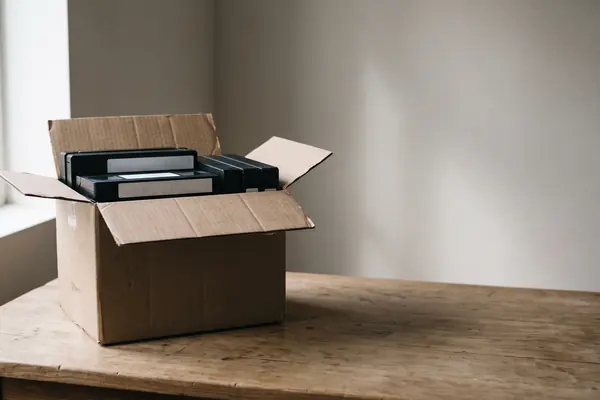
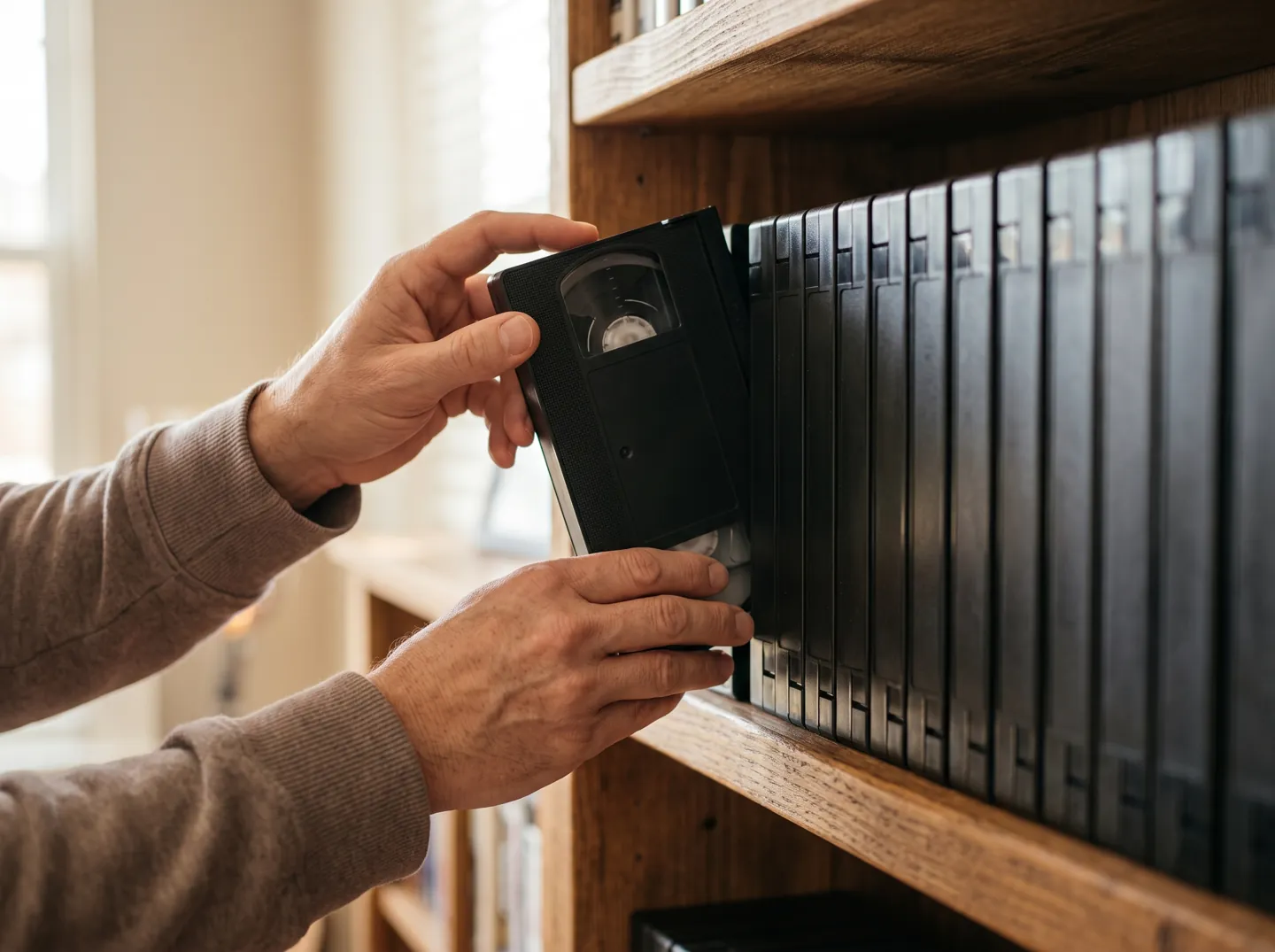
The Library of Congress suggests a cool, relatively dry spot (about 35-40% humidity) for home collections, with cassettes stored upright on their long edge, away from lofts, cellars and radiators.
Check your storage videodoodle
WHAT THE ARCHIVES SAY
Videotape was never built to last for ever.
Check your storage
COPY ITwhile it still plays
The weddings, birthdays and holidays on VHS and camcorder tapes sit on a thin layer of magnetic coating that slowly breaks down. Archivists agree on the fix: store the tapes well, play them as little as possible, and copy them while machines that play them still work.
At a glance
≈ 30 years
Upper limit for magnetic tape
According to manufacturers' data sheets and technical literature, about thirty years appears to be the upper limit for magnetic tape, including video and audio tapes, and practical life expectancies run from ten to thirty years.
TAPE LIFE · VAN BOGART 1995
70%
Audio, video and film at immediate risk
A 2001 European study of four million hours of archive content found 70% of the audio, video and film at immediate risk from format and equipment obsolescence, tape decay and damage.
ARCHIVES · DPC 2012
TWO NUMBERS WORTH KNOWING
One figure on how long tape lasts,
one on how much archive video is at risk.
The Digital Preservation Coalition report adds that for audio and videotape the urgency is to digitise adequately as soon as possible, "because the playback machines are already disappearing".
A QUICK STORAGE CHECK
Pick the conditions closest to where your tapes are kept. The figures are estimated life expectancies for a high-grade VHS tape from a 1995 tape storage guide; the bar shows how much risk the conditions add.
Estimates for one tape type, worked out from how fast the coating's binder breaks down. Real tapes vary with age, brand and use.
THE SHORT ANSWER
Tape decays slowly and players are disappearing.
Archive advice comes down to three habits.
STORAGE
The Library of Congress suggests a cool, relatively dry spot (about 35-40% humidity) for home collections, with cassettes stored upright on their long edge, away from lofts, cellars and radiators.
Check your storagePLAYING
The more you play a tape, the more you wear it down. Each time a VHS cassette loads, the machine pulls tape out of the shell, and a dirty or misaligned player can scratch or eat it.
See the numbersCOPYING
Once a tape is digitised, keep at least two copies on separate media, stored as far apart as practical, and check them once a year.
How to do it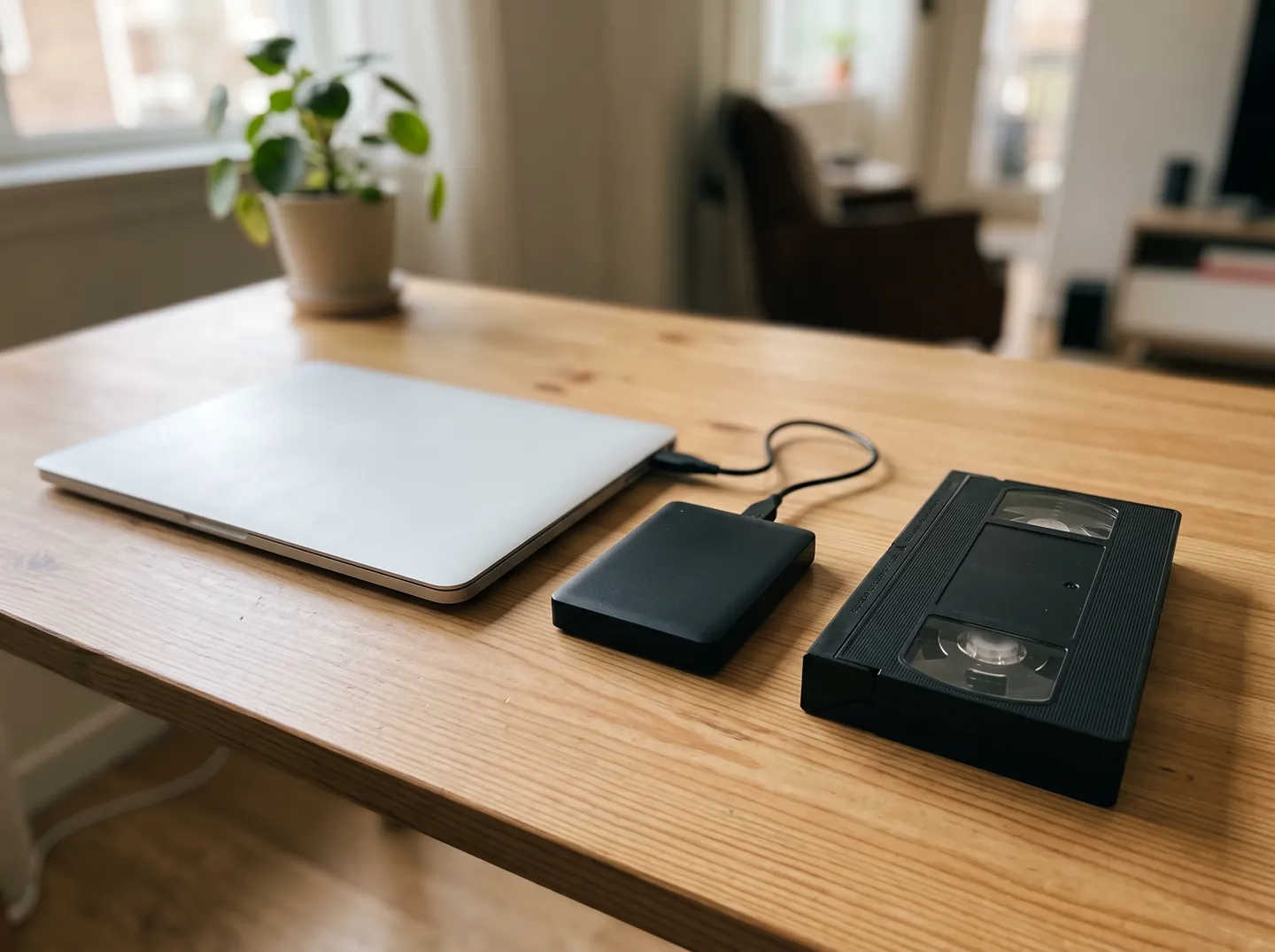
HOW TO SAVE A TAPE
The steps below follow the Library of Congress personal archiving guides and the National Cyber Security Centre's advice on backing up family videos.
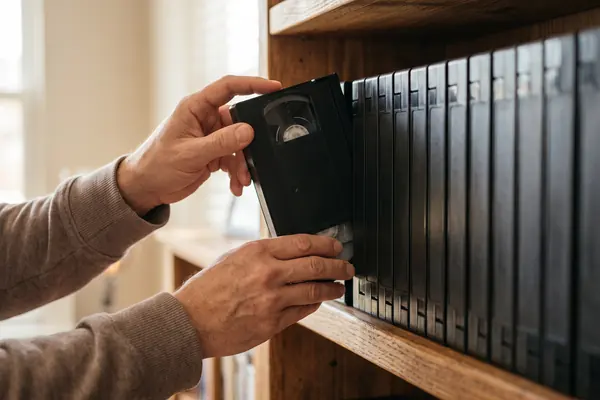
Hold cassettes by the outer shell and never touch the tape or spools. Keep them away from motors, loudspeakers, vacuum cleaners and television sets, and stand them upright like books.
If a tape comes from somewhere much colder, let it settle first: the 1995 guide suggests about four hours for every 10 °C difference before playing.
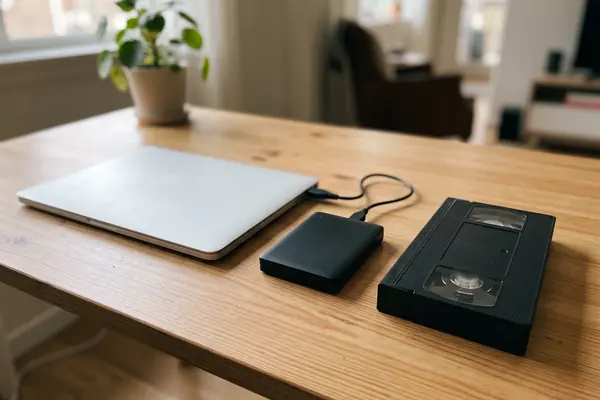
Play the tape through a working VCR into a capture device, camcorder or DVD recorder. Copy only tapes you have the right to copy; copy-protected tapes may come out blurry or scrambled.
Give files descriptive names, keep one copy on your computer and another on separate media or in the cloud, and make fresh copies about every five years.
WHEN A TAPE IS IN TROUBLE
As the binder that holds the magnetic coating absorbs moisture, a tape can turn sticky: it sheds debris that clogs the player's heads, causes dropouts in the picture and, in extreme cases, makes the tape seize in the machine.
The Library of Congress says cleaning magnetic tape is a delicate job for a preservation specialist. If a precious tape looks mouldy or plays badly, stop playing it and ask a professional transfer service or a local archive for advice rather than forcing it through a VCR.
Questions
A 1995 guide for libraries and archives says about thirty years appears to be the upper limit for magnetic tape, with practical life expectancies of ten to thirty years. Warm or damp storage shortens that.
Somewhere cool, relatively dry (about 35-40% relative humidity for home collections, says the Library of Congress), clean, dark and stable. Avoid lofts, cellars, radiators and vents.
The Library of Congress suggests storing played tapes without rewinding and rewinding just before playing. For long-term storage, the 1995 guide says rewinding at least every three years relieves stress in the tape pack.
Yes, as a backup. The Library of Congress suggests keeping them in sleeves or boxes, out of direct sunlight, in a cool room of about 18 °C (65 °F) at about 45% humidity.
At least two, says the Library of Congress, on separate media in different places, checked once a year. The NCSC suggests keeping irreplaceable family videos both in the cloud and on removable media.
Sources
ABOUT THIS NAME
videodoodle.com is part of the DoodleSale portfolio. It isn't in an auction right now, but you can ask about leasing it.